
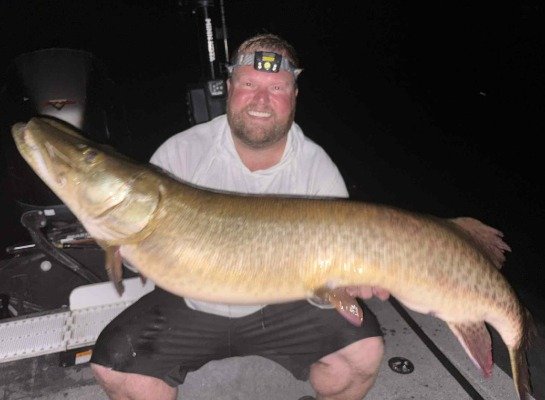
Wisconsin is one of the great boating states in the country — 15,000 inland lakes, 42,000 miles of rivers and streams, 1,000 miles of Great Lakes shoreline, and 260 miles of the Mississippi River. With that much water comes a regulatory framework that every boat owner and angler needs to understand before launching. For 2026 the Wisconsin DNR has implemented several significant regulation changes — including a unified musky opener that eliminates the split Northern and Southern zone seasons, new smallmouth bass catch-and-release requirements on Lake Michigan and the Door County shoreline, and a new lake sturgeon catch-and-release season. This guide covers Wisconsin boating law, fishing regulations, and what’s new for 2026 — with specific focus on the regulations that affect Lake Winnebago, the Winnebago System, Lake Michigan, Green Bay, and the Northwoods.
Wisconsin Marine Experts and Official Resources
Boat Winterization Information and Costs in Wisconsin
I’ve been boating and fishing Wisconsin waters for 40 years — and one thing I’ve learned is that regulations change every year in ways that matter. What was legal last season may not be legal this season, and a conservation warden isn’t interested in what you thought the rule was. Make it a habit to check the current DNR regulation booklet before your first trip of the year — every year. One distinction that catches visiting anglers off guard every season: Lake Michigan and Green Bay are federal waters governed by U.S. Coast Guard requirements in addition to Wisconsin DNR regulations. The engine cut-off switch lanyard requirement, navigation light standards, and certain fishing regulations on those waters follow federal rules that don’t apply on your average inland Wisconsin lake. If you’re making your first trip to Door County or Green Bay from an inland lake background — read the federal water rules before you launch.
2026 Wisconsin Fishing Regulation Changes — What Every Angler Must Know
The Wisconsin DNR implemented several significant fishing regulation changes for the 2026-2027 season. Every angler on Wisconsin water needs to be aware of these before launching. Ignorance of regulation changes is not a defense when a conservation warden asks for your license.
NEW FOR 2026 — Unified Musky Opener Statewide
The muskellunge season now opens May 2 on all inland waters of the state. There is no longer a separate season for the Northern Zone. This is the most significant musky regulation change in Wisconsin in decades — and it affects every musky angler in the state.
Previously Wisconsin had a split musky season — the Northern Zone opened later than the Southern Zone, a structure that dated back to the early 1980s when the DNR was managing significant musky harvest. In the late 1970s and early 1980s Wisconsin anglers were harvesting upwards of 66,000 muskies annually. That number has drastically changed — today only a few hundred muskies are harvested annually reflecting the enormous shift toward catch-and-release musky fishing culture. The split season no longer serves its original management purpose.
| Previous Regulation | 2026 New Regulation | |
| Southern Zone inland musky opener | Earlier date | May 2, 2026 |
| Northern Zone inland musky opener | Later date — separate from Southern Zone | May 2, 2026 — same as Southern Zone |
| Great Lakes, Green Bay, Michigan/Minnesota boundary waters | Separate season structure | Unchanged — separate season remains |
| Musky season close — inland | December 31 | December 31 — unchanged |
| Minimum size | Water-specific — check your specific lake | Water-specific — unchanged |
Critical note for Northwoods musky anglers: The unified opener applies to inland waters only. The muskellunge season structures for the Great Lakes, Green Bay, and Michigan/Minnesota boundary waters are unchanged. If you’re fishing musky on Green Bay, Lake Michigan, or the Minnesota boundary waters — the previous season structure still applies. Check your specific water before you launch.
NEW FOR 2026 — Smallmouth Bass Changes on Lake Michigan and Door County
This is the regulation change most likely to catch Wisconsin anglers off guard in 2026 — particularly Door County and Green Bay anglers who target smallmouth bass in Lake Michigan waters.
The smallmouth bass harvest has changed in Lake Michigan and tributaries to Green Bay and Lake Michigan. This includes a catch-and-release period for all waters within 5 miles of the Door County shoreline.
| Water | 2026 Smallmouth Bass Regulation | Notes |
| Lake Michigan — general | Updated harvest regulations | Check DNR fishing handbook for specific dates and limits |
| Tributaries to Green Bay | Updated harvest regulations | Includes tributary streams and rivers |
| Tributaries to Lake Michigan | Updated harvest regulations | Check current DNR regs for specific waters |
| Waters within 5 miles of Door County shoreline | Catch-and-release period applies | Specific dates — consult DNR fishing handbook pages for exact window |
If you fish Door County smallmouth in Lake Michigan waters — this regulation directly affects your season. The catch-and-release period protects smallmouth bass during a critical portion of the season. Keeping smallmouth bass during the catch-and-release period on these waters is a violation. Check the Wisconsin DNR 2026-2027 fishing regulations handbook for the specific dates of the catch-and-release window before your first trip to Door County this season.
NEW FOR 2026 — Lake Sturgeon Catch-and-Release Season
A new catch-and-release season for lake sturgeon runs from June 6, 2026 through March 7, 2027 on select waters. This is a new hook-and-line fishing opportunity for a species that was previously catch-and-release only on the Winnebago System spearing season. The select waters for the 2026 sturgeon catch-and-release season include:
- Portions of the Namekagon River
- St. Croix River
- Bear River
- Little Turtle River
- Flambeau River
- Turtle-Flambeau Flowage
- South Fork, East Fork, and West Fork Chippewa River
Lake Winnebago System sturgeon note: The new catch-and-release season does not include the Lake Winnebago System. The Winnebago System retains its existing sturgeon regulations — the February spearing season and the September hook-and-line season. For specific Winnebago System sturgeon regulations see pages 72 and 73 of the Wisconsin DNR 2026-2027 Fishing Handbook.
NEW FOR 2026 — Panfish Bag Limit Changes on Nearly 100 Lakes
More than 100 lakes have updated panfish regulations including species-specific bag and size limits. A decade-long experimental panfish regulation has concluded — and the results have driven changes on specific lakes across the state. Some waters previously allowing a 25-fish panfish limit have transitioned to a 10-fish daily bag limit. Some waters now have species-specific caps — for example a five-fish limit on a single panfish species within a broader daily limit.
The panfish changes are lake-specific and cannot be summarized in a single table. Before fishing panfish on any Wisconsin lake in 2026 — check the Wisconsin DNR’s searchable hook-and-line regulations at dnr.wisconsin.gov or pick up the current regulation booklet at any Wisconsin license vendor. Panfish regulations that applied to your favorite lake last season may have changed.
Wisconsin Boating Laws — The Core Requirements Every Operator Must Know
Beyond fishing regulations, every person operating a motorized vessel on Wisconsin water is subject to Wisconsin boating law. Here’s the complete picture of what the law requires:
Boating Safety Education Certificate
Wisconsin requires a boating safety education certificate for anyone born on or after January 1, 1989 to operate any motorized vessel. The certificate must be carried onboard and available for inspection by a conservation warden. Equivalent NASBLA-approved certificates from other states are accepted — if you completed a boating safety course in Illinois, Minnesota, or any other state, your certificate is valid in Wisconsin.
Engine Cut-Off Switch — Federal Requirement on Wisconsin Federal Waters
A federal law requires all operators of motorized vessels under 26 feet with three or more horsepower to use an engine cut-off switch lanyard whenever the engine is in gear. This law applies on federal waters including Green Bay, Lake Michigan, the Winnebago System, and the Fox River. The lanyard must be attached to the operator’s body, PFD, or clothing — not just clipped to the boat. Violations on federal waters are federal violations enforced by the U.S. Coast Guard as well as Wisconsin wardens.
Speed Limits and No-Wake Zones
Wisconsin’s statewide speed regulation — slow-no-wake within 100 feet of any shoreline, dock, raft, swimming area, or anchored vessel — applies on all Wisconsin waters. Additional local regulations are common and often more restrictive than state law. Before boating on any unfamiliar Wisconsin lake check for posted signs at the public boat launch — local municipalities can and do enact regulations that go beyond state minimums.
| Regulation | Statewide Standard | Common Local Addition |
| Speed near shoreline | Slow-no-wake within 100 feet | Some lakes extend to 200 feet |
| Speed near docks and swimmers | Slow-no-wake within 100 feet | Some lakes extend further |
| PWC near shoreline | Slow-no-wake within 200 feet | Stricter on some lakes |
| Nighttime operation | Navigation lights required after sunset | Some lakes prohibit nighttime operation entirely |
| Hours of operation | No general statewide restriction | Some lakes restrict operation hours — posted at launch |
Required Safety Equipment
Every vessel on Wisconsin water must carry the following equipment at all times:
- Life jackets — one U.S. Coast Guard-approved PFD for every person aboard. Children under 13 must wear a life jacket whenever on an open deck of a moving vessel
- Throwable device — vessels 16 feet or longer must carry a Coast Guard-approved Type IV throwable device — a life ring or throw bag — in addition to wearable PFDs
- Fire extinguisher — required on any vessel with an enclosed engine compartment, fuel tank, or cooking/heating device
- Navigation lights — required for operation between sunset and sunrise — bow light, stern light, and sidelights per Coast Guard specifications
- Sound-producing device — a horn, whistle, or bell audible for at least one-half mile
- Visual distress signals — required on vessels operating on Lake Michigan and Lake Superior
Boating Under the Influence — Wisconsin BUI Law
Wisconsin’s BUI law mirrors its OWI law — operating a boat with a blood alcohol concentration of 0.08% or higher is a criminal offense. Penalties escalate with prior offenses and include fines, jail time, and loss of boating privileges. Wisconsin DNR wardens and local law enforcement actively enforce BUI on Wisconsin waters — particularly on peak holiday weekends on busy lakes including Lake Winnebago, Lake Geneva, the Northwoods chain lakes, and Lake Michigan.
One Wisconsin-specific note — a BUI conviction in Wisconsin counts as a prior offense for OWI purposes on Wisconsin roads. The two enforcement systems are linked. A boating conviction can affect your driving record.
Lake Winnebago and the Winnebago System — Specific Regulations
A few years ago I brought a friend up to Green Bay in March for the walleye run. He caught his first fish of the day and threw it straight into the live well — which is exactly what you’d do on most Wisconsin lakes. I asked him what he was doing and realized quickly he had no idea the walleye season on Green Bay was catch-and-release only at that time of year. We released it immediately and even flagged down the boat next to us to make sure they knew the same rule. Nobody got cited — but we were fortunate the DNR wasn’t watching that moment. The point isn’t that my friend was careless — he’s an experienced angler. The point is that Green Bay and Lake Michigan operate under different seasonal regulations than the inland lakes he’d been fishing his whole life. Regulations that are obvious to a local are invisible to someone fishing a new water body for the first time. Check the specific regulations for every new water you fish — every year.
The Lake Winnebago System — encompassing Lake Winnebago, Lake Butte des Morts, Lake Poygan, Lake Winneconne, and connecting waters of the Fox and Wolf Rivers — has its own specific regulatory structure that differs from general Wisconsin inland waters in several important ways:
| Species | Winnebago System Regulation | General Inland Wisconsin |
| Walleye and sauger | Continuous open season — any length may be kept | Seasonal opener May 2 |
| Largemouth and smallmouth bass | Continuous open season — 14″ minimum | Seasonal opener May 2 |
| Northern pike | Continuous open season — specific size limits | Seasonal opener |
| Muskellunge | May 2 – December 31 — 50″ minimum | May 2 — size limits vary by water |
| Lake sturgeon — spearing | February 14 – February 23, 2026 | N/A |
| Lake sturgeon — hook and line | September 5 – September 30, 2026 | New C&R season on select waters |
| Panfish | General Wisconsin regulations apply — check specific waters | Water-specific |
The continuous open seasons on the Winnebago System for walleye, bass, and pike are a significant departure from general Wisconsin inland regulations — and a major reason the Winnebago System is so productive for year-round fishing. The trade-off is that the specific size limits and creel limits on Winnebago System waters are distinct from general inland regulations. Carry the current Wisconsin DNR regulation booklet on your boat whenever fishing the Winnebago System — the specific creel limits and size minimums for pike in particular have historically differed from statewide standards.
Green Bay and Lake Michigan — Boating and Fishing Regulations
Green Bay and Lake Michigan are federal waters — regulated by both the Wisconsin DNR and the U.S. Coast Guard. Several specific regulations apply on these waters that don’t apply on inland Wisconsin lakes:
- Engine cut-off switch lanyard — mandatory on vessels under 26 feet on all federal waters including Green Bay and Lake Michigan. This is a federal requirement — not just a Wisconsin DNR rule
- Navigation lights — Great Lakes navigation light requirements follow U.S. Coast Guard specifications — verify your vessel’s light configuration meets Coast Guard standards before operating after dark on Lake Michigan or Green Bay
- VHF marine radio — not legally required on recreational vessels but strongly recommended for operation on Green Bay and Lake Michigan. The Coast Guard monitors VHF Channel 16 and emergency communication on federal waters relies on VHF
- Great Lakes Trout and Salmon Stamp — required for fishing trout or salmon in Wisconsin Great Lakes waters including Green Bay and Lake Michigan tributaries designated as outlying trout and salmon waters. The stamp is in addition to a regular Wisconsin fishing license
- Smallmouth bass catch-and-release period — NEW FOR 2026 — applies on Lake Michigan, Green Bay tributaries, and all waters within 5 miles of the Door County shoreline. See the 2026 DNR regulation handbook for specific dates
Wisconsin Northwoods Boating — What Hayward, Minocqua, and Eagle River Boaters Need to Know
The Wisconsin Northwoods — the concentration of lakes and rivers in Vilas, Oneida, Sawyer, Price, and Iron counties — has specific considerations for boat owners that differ from southern Wisconsin and the Winnebago corridor:
- Ceded Territory regulations — much of the Wisconsin Northwoods falls within the Ceded Territory — 22,400 square miles ceded by the Lake Superior Chippewa tribes in 1837 and 1842. Ceded Territory walleye regulations differ from general Wisconsin inland regulations — a daily bag limit of three walleye applies on most Ceded Territory waters with specific size limits. Check the Ceded Territory regulations before fishing walleye in the Northwoods
- AIS inspection programs — the Northwoods has some of Wisconsin’s most active Clean Boats Clean Waters inspection programs. Hayward area lakes, the Vilas County chain lakes, and the Eagle River area all have trained inspectors at busy launches during the season. Expect inspections and cooperate with them
- Local speed and no-wake ordinances — many Northwoods lakes have local ordinances more restrictive than state law. Check for posted signs at every new launch
- Early season ice considerations — Northwoods lakes can retain ice on the edges in early May even after the inland fishing season opens. Be cautious launching in early May — ice-free appearance from the dock doesn’t mean the shallow coves and launch ramp areas are fully clear
- Flowage regulations — the Northwoods has numerous flowages — managed impoundments — that often have distinct regulations from the lakes they’re associated with. Turtle-Flambeau Flowage, Chippewa Flowage, and Trout Lake flowage all have specific rules. Check before fishing any flowage you haven’t fished recently
Wisconsin Boat Registration Requirements
All motorized boats and sailboats on Wisconsin waters must be registered with the Wisconsin DNR. Here are the current registration requirements:
| Vessel Type | Registration Required | Fee | Renewal |
| All motorized vessels | Yes | Based on length — starts around $22 | Annual |
| Sailboats — 12 feet or longer | Yes | Based on length | Annual |
| Non-motorized vessels — canoes, kayaks, paddleboards | No — if non-motorized | N/A | N/A |
| Out-of-state vessels | May operate for 60 days without Wisconsin registration | Home state registration required | N/A |
| Vessels from reciprocal states | Recognized in Wisconsin | Home state registration required | N/A |
Wisconsin registration numbers must be displayed on both sides of the bow in characters at least three inches high — in a color that contrasts with the hull. The registration card must be carried aboard whenever the vessel is in use. Wisconsin registration decals must be affixed within six inches of the registration number.
From the Water
Because I fish all over Wisconsin — from Lake Michigan and Green Bay to the Northwoods chain lakes to the Winnebago System — I have to stay current on regulations across multiple regulatory frameworks simultaneously. Making sure my flares aren’t expired before a Lake Michigan trip, knowing the current crappie limit on whatever Northwoods lake I’m fishing that weekend, understanding whether the Winnebago System walleye rules apply to the stretch of Fox River I’m standing on — these aren’t things you can wing. Not everyone agrees with every regulation the DNR puts in place — that’s a normal part of being an angler. But they’re there for a reason, and in most cases that reason is protecting the fisheries that make Wisconsin worth fishing in the first place. Follow them, check them every year, and fish with confidence knowing you’re doing it right.
Frequently Asked Questions About Wisconsin Boating Laws
Do I need a boating safety certificate in Wisconsin?
Yes — if you were born on or after January 1, 1989 you must carry a Wisconsin-approved boating safety education certificate to operate any motorized vessel in Wisconsin. The certificate must be onboard and available for inspection. Certificates from other states that meet NASBLA standards are accepted.
What changed in Wisconsin musky regulations for 2026?
The biggest change is a unified statewide inland musky opener on May 2 — eliminating the previous split between Northern and Southern zone opener dates. The Northern Zone no longer has a separate later opener. The musky season now opens May 2 statewide on all inland waters and runs through December 31. The season structures for the Great Lakes, Green Bay, and Michigan/Minnesota boundary waters are unchanged.
What are the new smallmouth bass regulations on Lake Michigan and Door County for 2026?
The Wisconsin DNR implemented new smallmouth bass harvest regulations on Lake Michigan, tributaries to Green Bay and Lake Michigan, and all waters within 5 miles of the Door County shoreline for 2026. This includes a catch-and-release period on Door County shoreline waters. Consult the Wisconsin DNR 2026-2027 fishing regulations handbook for the specific dates and affected waters before fishing smallmouth in Lake Michigan or Green Bay waters.
What are the speed limits on Wisconsin lakes?
The statewide Wisconsin standard is slow-no-wake speed within 100 feet of any shoreline, dock, raft, swimming area, or anchored vessel. Many Wisconsin lakes have local ordinances that extend no-wake zones beyond 100 feet or restrict hours of operation. Check for posted signs at every public boat launch before operating on an unfamiliar Wisconsin lake.
Are there special regulations on Lake Winnebago?
Yes — the Lake Winnebago System has a distinct regulatory structure from general Wisconsin inland waters. The Winnebago System has continuous open seasons for walleye, bass, and northern pike — unlike the seasonal opener on most Wisconsin lakes. Size limits and creel limits on Winnebago System waters differ from statewide standards. The lake sturgeon spearing season runs in February and the hook-and-line season runs in September — both with specific harvest caps and reporting requirements. Carry the current Wisconsin DNR regulation booklet whenever fishing the Winnebago System.
Find Marine Service Providers Across Wisconsin
Find Boat Services lists verified marine service providers across Wisconsin — from the Winnebago System corridor to the Northwoods lakes to the Lake Michigan shoreline. Find motor repair, boat storage, electronics, and fiberglass specialists near your Wisconsin lake.
Related articles that may help:
- What Does Outboard Motor Service Cost in the Midwest?
- How Much Does Boat Storage Cost in the Midwest in 2026?

Author: Aaron Drendel
A US Navy veteran, Aaron has worked as a commercial Salmon fisherman in Alaska, canoed 2,500 miles down the Mississippi River from source to sea, and is a lifelong fisherman in the Midwest region. He founded Find Boat Services to ensure fellow boaters across the Heartland spend less time on the trailer and more time on the water.
Leave a Reply