
Zebra mussels are the single most consequential aquatic invasive species threat facing Midwest boat owners today — and most boaters dramatically underestimate both how far they’ve spread and what they can do to your engine. Zebra mussels were first detected in the U.S. in 1988 and are now found in 32 states. Minnesota alone has confirmed zebra mussels in 378 lakes and wetlands as of June 2025. They are established throughout the Great Lakes, the Mississippi River system, Lake Winnebago, Lake Minnetonka, Lake Michigan, and hundreds of inland Midwest lakes. They are in waters you fish every season. They are invisible in their larval stage. And they can colonize your outboard cooling system in as little as two to three weeks — causing overheating damage that starts at $2,000 and climbs fast. This guide covers everything a Midwest boat owner needs to know about zebra mussels — what they do to your boat, how they spread, what the law requires, and what you should actually be doing every time you leave the water. When zebra mussels colonize your cooling system, finding a qualified outboard motor service shop quickly is the difference between a repair bill and an engine replacement.
I consider the Great Lakes corridor and my home state of Illinois to be the epicenter of aquatic invasive species pressure in the Midwest — and I’ve encountered the evidence firsthand across decades of boating and fishing. Asian Carp jumping out of the water on the Illinois River. Rusty Crayfish in Lake Vermilion. Zebra Mussels coating every hard surface in Lake Michigan. Eurasian Milfoil choking the shallow bays of Lake Minnetonka. Round Gobies in Door County. Sea Lampreys on Lake St. Clair. Each one a different story of how a species arrives somewhere it doesn’t belong and changes everything it touches. Some have had unintended benefits — zebra mussels have dramatically increased water clarity in parts of Lake Erie, and gobies have become a significant food source for smallmouth bass. But the ecological tradeoffs are never worth it. We all have a responsibility to make sure we’re not the boat that carries the next one to a clean lake. Understanding the history of Zebra Mussels on the Great Lakes can help with mitigating their spread.
What Zebra Mussels Actually Are — And Why They’re Different From Other Invasive Species
Zebra mussels are small freshwater bivalves — typically thumbnail-sized at maturity with distinctive black and cream striped shells — native to the Caspian and Black Seas of Eastern Europe. They arrived in the United States in the late 1980s in the ballast water of ocean-going ships traversing the St. Lawrence Seaway into the Great Lakes. The first established population was discovered in 1988 at Lake St. Clair, which straddles the U.S.-Canada border between Lake Erie and Lake Huron. From there they spread rapidly — downstream through river systems and laterally through boat transport — across the Midwest and beyond.
What makes zebra mussels uniquely dangerous compared to other aquatic invasive species is a combination of three characteristics that no other freshwater invasive possesses simultaneously:
- Reproductive rate — an adult female zebra mussel can produce 30,000 to 40,000 eggs in each reproductive cycle and over one million eggs per year. A single fertilized female transported on a boat can establish a reproducing colony in a new lake within one season T
- Survival out of water — adult zebra mussels can survive out of water for approximately five days — longer if conditions are cool and humid. This means a boat pulled from an infested lake and trailered to a clean lake the following weekend can introduce a viable population even if the boat appears dry
- Attachment capability — zebra mussels attach to any hard surface using protein threads called byssal threads. Rocks, docks, native mussels, boat hulls, engine components, live well screens, trailer frames — anything submerged in infested water becomes a potential colonization site. They do not attach to soft surfaces which is why they colonize hard engine components specifically
Where Zebra Mussels Are Established in the Midwest Right Now
The geographic spread of zebra mussels across the Midwest directory lakes is more extensive than most boaters realize. Here’s the current status across the 16 states in the directory:
| State | Zebra Mussel Status | Key Infested Waters |
| Minnesota | Extensively infested — 378 confirmed lakes as of June 2025 | Lake Minnetonka, Mille Lacs, Gull Lake, Lake Vermilion, and hundreds more |
| Wisconsin | Extensively infested | Lake Winnebago, Lake Michigan shoreline, Lake Geneva, Madison chain of lakes, Chippewa Flowage |
| Michigan | Extensively infested | All Great Lakes shoreline, inland lakes throughout Lower Peninsula |
| Illinois | Established — Great Lakes corridor | Lake Michigan shoreline, Chicago waterway system, inland lakes in northern Illinois |
| Indiana | Established | Lake Michigan shoreline, Tippecanoe Lake, other northern Indiana lakes |
| Ohio | Extensively infested | Lake Erie — one of the earliest and most severely impacted Great Lakes |
| Iowa | Confirmed in multiple lakes | Mississippi River pools, Spirit Lake, Storm Lake, Big Spirit Lake |
| Missouri | Confirmed and spreading | Table Rock Lake, Lake of the Ozarks, Truman Lake, Bull Shoals |
| Tennessee | Confirmed in major reservoirs | Kentucky Lake, Lake Barkley, Cherokee Lake |
| Kentucky | Confirmed | Kentucky Lake, Lake Barkley, Lake Cumberland |
| Arkansas | Confirmed in Arkansas River corridor | Beaver Lake, Lake Ouachita — spreading |
| Nebraska | Confirmed | Lewis and Clark Lake, Missouri River corridor |
| Kansas | Confirmed — spreading | Milford Lake, Cheney Reservoir |
| Oklahoma | Confirmed | Grand Lake O’ the Cherokees, Lake Texoma |
| North Dakota | Detected — active monitoring | Missouri River system — Lake Sakakawea at risk |
| South Dakota | Active monitoring | Lewis and Clark Lake — Missouri River corridor |
The practical implication of this map — if you boat on any significant Midwest lake or river, there is a meaningful probability that zebra mussels are present or will be present within a few seasons. The question for every Midwest boat owner is not whether you’ll encounter infested waters — it’s whether you’re protecting your boat and other lakes when you do.
What Zebra Mussels Do to Your Boat — The Real Costs
This is the section most zebra mussel articles skip — the specific mechanical damage that translates into real repair bills for Midwest boat owners. Understanding the damage pathway is what motivates consistent prevention behavior.
The Cooling System — Your Engine’s Most Vulnerable Point
Zebra and quagga mussels can obstruct engine cooling passages, resulting in overheating and mechanical breakdown. Here’s exactly how it happens. Your outboard motor draws raw lake water through an intake in the lower unit, circulates it through the engine to absorb heat, and expels it through the exhaust. The impeller — a rubber water pump — drives this circulation. When zebra mussel larvae enter this system through the raw water intake, they settle on any hard surface they can find — the inner walls of cooling passages, the thermostat housing, the exhaust manifold water jacket. Over two to three weeks of exposure in infested water, a colony can establish that significantly restricts water flow.
The damage sequence from restricted cooling flow:
- Stage 1 — reduced water flow causes the engine to run hotter than normal. Temperature warning systems may or may not alert the operator depending on thermostat placement
- Stage 2 — sustained elevated temperature degrades the impeller rubber faster than normal — accelerating impeller failure and further reducing cooling flow
- Stage 3 — thermostat failure from heat stress — the thermostat can warp or stick open or closed, causing erratic temperature regulation
- Stage 4 — powerhead damage — cylinder head warping, head gasket failure, or in severe cases cracked engine block from sustained overheating
- Stage 5 — powerhead replacement — the most expensive outcome — starting at $2,000 and reaching $5,000 or more depending on engine size and brand
The repair cost progression from Stage 1 to Stage 5 is exponential. A cooling system flush that catches the problem at Stage 1 costs $150 to $300. Addressing impeller failure at Stage 2 costs $200 to $400. A powerhead replacement at Stage 5 costs $2,000 to $5,000 or more. The prevention cost — flushing your motor with fresh water after every outing on infested water — costs nothing beyond your time.
Hull and Drive Fouling
Beyond the cooling system, zebra mussels colonize any hard surface on your boat that spends time in infested water — the hull below the waterline, the lower unit, the trim tabs, the prop shaft, and trailer components. A boat left in a slip on Lake Minnetonka or Lake Winnebago for several weeks without regular inspection can accumulate significant mussel colonies on these surfaces.
- Hull drag — mussel colonies on the hull create drag that reduces fuel efficiency and top speed. On a boat that spends the season in a slip in infested water, this drag is measurable and progressive throughout the season
- Lower unit and prop shaft — mussels that colonize around the prop shaft and into the seal area accelerate seal wear — the same damage pattern as fishing line fouling. Annual prop shaft inspection and seal replacement is increasingly important for boats on infested Midwest lakes
- Trailer fouling — trailer bunks, rollers, and frames that spend time in infested water can carry live mussels and mussel larvae between lakes. A trailer that looks clean can be carrying viable veligers in small water pockets that aren’t visible at the ramp
- Live well screens — live well intake screens are a particularly high-risk transport mechanism. Water drawn into a live well from an infested lake contains veligers. If that water is released into a clean lake the veligers go with it
The Law — What Each State Requires
Every state in the directory has specific legal requirements around aquatic invasive species transport. Violation of these laws carries real penalties — fines in most states range from $100 to $500 per violation and can be significantly higher for commercial operators or repeat offenders. Here’s the state-by-state legal landscape:
| State | Clean Drain Dry Required | Mandatory Inspection | Key Penalty |
| Minnesota | Yes — every water access | Yes — at many infested lake accesses | Up to $1,000 fine — inspectors have authority to deny launch |
| Wisconsin | Yes — every water access | Voluntary Clean Boats Clean Waters program | Fines for transporting AIS |
| Michigan | Yes — every water access | DNR inspections at high-risk launches | Misdemeanor for transporting AIS |
| Illinois | Yes | DNR inspections | Fines for transporting AIS |
| Indiana | Yes | DNR inspections at key accesses | Civil penalties |
| Ohio | Yes | Ohio DNR inspections | Fines for transporting AIS |
| Iowa | Yes | Inspections at infested water accesses | Civil and criminal penalties |
| Missouri | Yes | Conservation agents at busy launches | Fines for transporting AIS |
| Tennessee | Yes | TWRA inspections | Civil penalties |
| Kentucky | Yes | Kentucky Fish and Wildlife inspections | Civil penalties |
Minnesota has the most aggressive inspection and enforcement program in the directory — watercraft inspectors have the authority to deny launch to any boat that has not been properly cleaned, drained, and dried — and they exercise that authority. If you’re trailering a boat from an infested lake to a Minnesota public access without following Clean Drain Dry protocols, you risk being turned away at the ramp and fined. The enforcement program works — and it’s worth understanding before you pull into a Minnesota boat launch.
The Clean Drain Dry Protocol — What You’re Actually Supposed to Do
Many busy Midwest boat ramps on infested lakes have dedicated boat cleaning and inspection stations — and in Wisconsin they take it seriously. At the lake near our family cabin outside Hayward, volunteers are at the boat ramp seven days a week during the season checking trailers for weed fragments, inspecting live wells for fish from other lakes, and making sure nothing hitchhikes in or out. These are unpaid volunteers giving their time to protect a lake they love. It’s genuinely impressive to see — and it puts the responsibility in perspective. If a volunteer is willing to stand at a ramp in the early morning to check your trailer, the least you can do is clean your boat before you get there. The inspection stations and volunteer programs help — but they can’t catch everything. The real line of defense is every individual boat owner taking the protocol seriously before they leave the water.
The Clean Drain Dry protocol sounds simple — and the individual steps are simple. The challenge is executing all of them consistently, every time, at every launch. Here’s what the protocol actually requires and why each step matters:
The five-day drying requirement is the step most boaters struggle with — particularly anglers who fish multiple lakes in a single week. If you can’t wait five days between launching on different water bodies, the alternative is hot water decontamination of all engine cooling passages, live wells, and water-holding components. Many Minnesota DNR decontamination stations offer free hot water decontamination — Minnesota operates 26 decontamination units statewide — and using them is faster than waiting five days and more reliable than a towel wipe-down on complex engine components.
What Midwest Boat Owners Should Do Every Season
Beyond the per-trip Clean Drain Dry protocol, there are season-level habits that significantly reduce zebra mussel damage risk for boats regularly used on infested Midwest waters:
- Flush after every outing on infested water — run your motor on fresh water for 5 to 10 minutes after every trip on an infested lake. This flushes veliger larvae from the cooling system before they can settle and colonize. This is the single highest-value preventive maintenance habit for Midwest boat owners on infested lakes
- Annual impeller inspection and replacement — for boats regularly used on infested Midwest lakes, annual impeller replacement is strongly recommended rather than the manufacturer’s standard two-year interval. Mussel debris and larvae accelerate impeller wear and annual replacement catches cooling system issues before they become engine damage
- Annual cooling system inspection by a qualified mechanic — have a qualified marine technician inspect cooling passages annually if your boat spends significant time on infested waters — Lake Winnebago, Lake Minnetonka, Lake Michigan, the Mississippi River system, or any confirmed infested lake
- Inspect your trailer — run your trailer through a high-pressure wash after every trip on infested water. Pay specific attention to the bunk boards, rollers, and any areas where water pools and mussels can hide in crevices
- Check your prop shaft — inspect the prop shaft and seal area after every season on infested water. Mussel colonies that establish around the shaft work into the seal area and accelerate wear — causing water intrusion into the lower unit
- Document your service — keep records of cooling system flushes and inspections. If you ever make a warranty claim related to overheating damage, documentation of proper AIS protocols protects you
The Ecology — Why This Matters Beyond Your Engine
Zebra mussels are not just a boat maintenance problem — they are an ecological disaster for every lake they enter. Understanding the broader impact is what separates boaters who follow Clean Drain Dry because they understand it from boaters who follow it because they’re told to.
- Filter feeding — zebra mussels process up to one liter of water per day per mussel. A large established colony can filter an entire lake’s water volume within weeks — removing the zooplankton that forms the base of the food web and starving native fish of food sources
- Water clarity paradox — zebra mussels increase water clarity dramatically by filtering out suspended particles. This sounds positive but enables sunlight to penetrate to greater depths — causing explosive growth of aquatic vegetation that chokes shallow areas and alters the habitat that fish depend on
- Native mussel extinction — zebra mussels attach to native unionid clams and mussels, restricting their ability to move, feed, and breed. This has led to near extinction of unionid clams in Lake St. Clair and the western basin of Lake Erie. Many of these native species are irreplaceable
- Economic damage — spending on efforts to repair damages and control or eradicate zebra mussels is estimated at $1 billion per year in the United States. Water intake pipes, power plant cooling systems, municipal water infrastructure — the economic damage extends far beyond recreational boating
- Once established — essentially permanent — once zebra mussels are established in a lake, very little can be done to control them. In 2026, total eradication is considered almost impossible and current efforts focus on control and containment. Every lake that gets zebra mussels effectively has them forever
That last point is the one that should motivate every Midwest boat owner to take Clean Drain Dry seriously. The lakes that don’t have zebra mussels yet — the clean Northwoods lakes of Wisconsin and Minnesota, the clear reservoirs of Tennessee and Arkansas, the pristine upper Missouri River reservoirs of the Dakotas — are worth protecting. Once mussels establish in a lake the damage is permanent. Every boat that moves between waters without following protocol is a potential vector.
From the Water
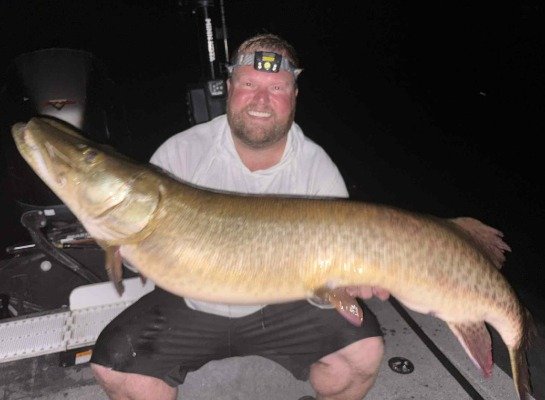
Invasive species have touched nearly every lake and river I’ve boated on in 40 years of Midwest fishing. I watched Asian Carp launch themselves out of the water during our 2,500-mile Mississippi canoe trip — so many and so large it was genuinely startling. And the biggest musky I’ve ever caught came to the net with a 12-inch sea lamprey locked onto its side. That image stays with you. A fish that took years to grow to that size, carrying a parasite that will slowly drain it. That’s what invasive species do — they attach themselves to something healthy and take from it until there’s nothing left to take. I don’t think we can reverse what’s already been done to most of our Midwest lakes. The mussels in Lake Michigan aren’t going anywhere. The carp in the Illinois River aren’t either. But we can protect the lakes that are still clean. That’s worth doing — and it starts every time you pull your boat out of the water.
Frequently Asked Questions About Zebra Mussels and Your Boat
Can zebra mussels damage my outboard motor?
Yes — directly and significantly. Zebra mussel larvae enter outboard cooling systems through the raw water intake and colonize the inner cooling passages, restricting water flow and causing overheating. The damage progression runs from thermostat failure to impeller destruction to powerhead damage — with repair costs starting at $150 for a cooling system flush caught early and reaching $2,000 to $5,000 or more for powerhead replacement from sustained overheating. Flushing your motor with fresh water after every outing on infested water is the most effective preventive measure.
How do I know if a lake has zebra mussels?
Check your state DNR’s infested waters list before launching on any unfamiliar Midwest lake. Minnesota’s list as of June 2025 includes 378 confirmed infested lakes. Wisconsin, Michigan, Ohio, and Illinois all maintain current infested waters lists on their DNR websites. If a lake is listed as infested — follow Clean Drain Dry protocol every time you leave that access regardless of whether you see any mussels on your boat.
What is the Clean Drain Dry protocol?
Clean — remove all aquatic plants, mussels, and debris from your boat, motor, trailer, and equipment before leaving any water access. Drain — drain all water from the motor, bilge, live wells, bait wells, and any water-holding compartments. Leave drain plugs out during transport. Dry — allow everything to dry for at least five days before launching in another water body, or decontaminate with hot water at 140°F or higher. Dispose — dispose of unused bait in the trash — never release it into another water body.
How long can zebra mussels survive out of water?
Adult zebra mussels can survive out of water for approximately five days — longer in cool, humid conditions. This is why the five-day drying requirement exists in state AIS protocols. A boat that appears dry on the outside may still have moisture in engine passages, live wells, and trailer crevices where mussels can survive during transport between lakes.
What should I do if I find zebra mussels on my boat or trailer?
Remove all visible mussels by hand or with a brush — dispose of them in the trash, never back into any water body. Decontaminate affected surfaces with hot water at 140°F or higher — many state DNR decontamination stations offer free hot water decontamination. Report the finding to your state DNR — particularly if you found them on a lake not currently on the infested waters list. Do not launch your boat on any other water body until decontamination is complete.
Find a Marine Shop That Understands Zebra Mussel Service
Annual cooling system inspection and impeller replacement are the most important preventive services for Midwest boat owners on infested lakes. Find Boat Services lists verified motor repair specialists across all 16 Midwest states — find a shop near your lake that understands the specific service needs of boats operating on zebra mussel-infested waters.
Related articles that may help:
Wisconsin Boating Laws 2026: What Lake Winnebago and Northwoods Boaters Need to Know
Illinois Boating Laws 2026: What Every Boat Owner on Lake Michigan and the Fox Chain Needs to Know

Author: Aaron Drendel
A US Navy veteran, Aaron has worked as a commercial Salmon fisherman in Alaska, canoed 2,500 miles down the Mississippi River from source to sea, and is a lifelong fisherman in the Midwest region. He founded Find Boat Services to ensure fellow boaters across the Heartland spend less time on the trailer and more time on the water.
Leave a Reply